
In today’s ever-changing world, learning is not just a one-time event and is no longer confined to a classroom. Instead, it is a lifelong journey that stretches far beyond formal education. Whether you’re an individual who wants to acquire new skills or a company striving to maintain a competitive advantage in its respective industry, continuous and high-quality learning is the key to success.
Tämä muutos tavassamme lähestyä oppimista on johtanut oppimisen hallintajärjestelmien (Learning Management Systems, LMS) syntymiseen, joilla on suuri rooli sekä yksilöiden että yritysten oppimiskokemusten parantamisessa. Niiden avulla voit pysyä ajan tasalla uudesta kehityksestä ja varmistaa, että sinulla on kaikki tarvitsemasi koulutus ja sitten vähän. Ne tarjoavat myös jäsennellyn ja tehokkaan tavan hankkia tietoa, parantaa taitoja ja mukautua nykymaailman jatkuvasti muuttuviin vaatimuksiin.
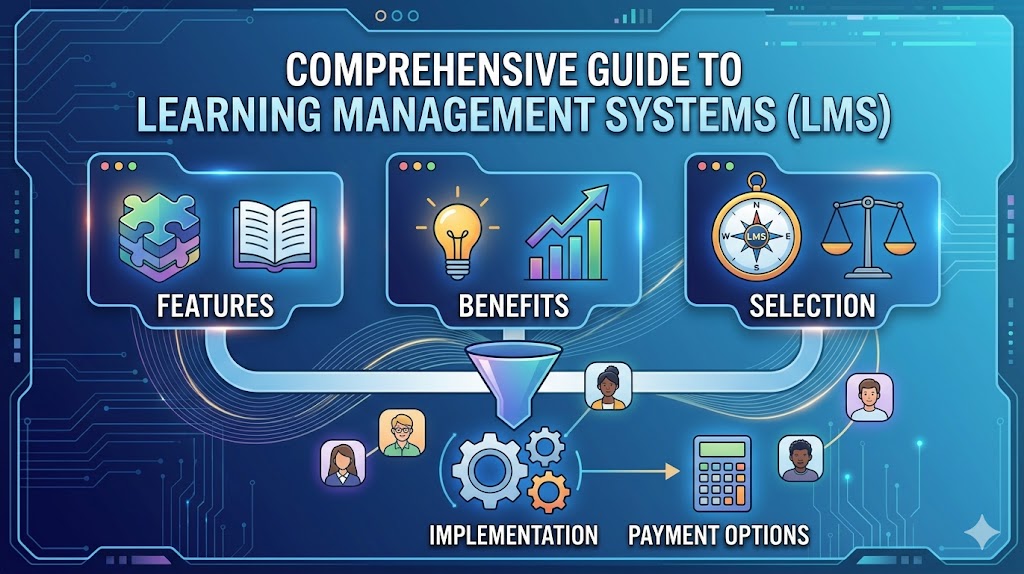
In this guide, we will show you everything you need to know about Learning Management Systems, talk more about the LMS meaning, give you some useful tips on selecting and implementing LMS systems in your workplace and day-to-day life, and more. So, without further ado, let’s dive in.
Johdatus oppimisen hallintajärjestelmiin (LMS)
Learning Management Systems eli LMS ovat digitaalisia alustoja, jotka on suunniteltu virtaviivaistamaan koulutussisällön ja koulutusohjelmien luonti-, toimitus-, hallinta- ja seurantaprosessia. Ne toimivat virtuaalisina keskuksina, joissa oppijat voivat käyttää monenlaisia resursseja, kuten kursseja, videoita, tietokilpailuja ja interaktiivisia materiaaleja, kun taas ohjaajat ja organisaatiot voivat tehokkaasti seurata edistymistä ja arvioida oppimistuloksia.
Lisäksi LMS-järjestelmät helpottavat tiedon levittämistä ja antavat yksilöille mahdollisuuden hallita omia oppimispolkujaan, mikä edistää autonomiaa ja itseohjautuvaa koulutusta.
LMS-järjestelmät tarjoavat yrityksille mahdollisuuden kehittää työntekijöiden taitoja, parantaa perehdytysprosesseja ja mukautua nopeasti alan muutoksiin, mikä varmistaa, että ne pysyvät kilpailukykyisinä ja ketterinä jatkuvasti kehittyvillä markkinoilla. Kun perehdymme LMS:n merkitykseen syvemmälle, käy selväksi, että ne vaikuttavat tulevaisuuden oppimiseen, jossa jatkuva henkilökohtainen ja ammatillinen kehitys on keskeisellä sijalla.
LMS:n perusteiden ymmärtäminen
Now that you know what the broader meaning of LMS is, let’s delve deeper into the subject and discover the definition and purpose that learning management systems have, as well as who are the key users of such an e-learning system.
Määritelmä: Mikä on oppimisen hallintajärjestelmä
Learning Management System (LMS) on digitaalinen oppimisjärjestelmä tai digitaalinen alusta, joka on suunniteltu tekemään oppimisesta paljon helpompaa. Oppimisen hallintajärjestelmät toimivat keskitettyinä koulutus- ja koulutusmateriaalien keskittinä, ja koska kaikki materiaalit ovat saatavilla verkossa, ihmiset kaikkialta maailmasta voivat käyttää niitä milloin haluavat ja missä haluavat.
Oppimisen hallintajärjestelmien avulla voit luoda, toimittaa koulutusohjelmia ja kursseja ja raportoida niistä. Joten et vain pääse koulutukseen, vaan voit myös luoda omia kursseja ja jakaa ne muiden toimialojesi tai työntekijöidesi kanssa.
LMS-järjestelmät ovat siis yrityksille loistava tapa kouluttaa uusia työntekijöitä tai laajentaa nykyisen työvoimansa taitoja ja tietoja. Yleensä LMS-järjestelmiä voidaan käyttää verkkoselaimien kautta, ja joissakin on jopa sovelluksia, jotka voit ladata oppiaksesi tai pysyäksesi ohjelmissasi liikkeellä ollessasi.
Tarkoitus: Mihin LMS:ää käytetään
LMS-järjestelmää voidaan käyttää monenlaisiin tarkoituksiin, ja mihin käytät sitä, riippuu tarpeistasi. LMS-käyttötapaukset voidaan kuitenkin jakaa kahteen luokkaan – koulutus ja koulutus.
Kun käytät opetusalustaa opetuksessa, tarjoat ihmisille kursseja, akateemista lisämateriaalia, laskentataulukoita ja muita vastaavia resursseja, jotka voivat auttaa heitä oppimaan tietyn taidon. Lisäksi monet koulut ja yliopistot käyttävät opetus-LMS-järjestelmiä tarjotakseen opiskelijoille selkeämmän tavan käyttää kurssimateriaaliaan ja nähdä arvosanansa.
Using LMS for training has become a standard practice for many organizations. That’s because by using a Learning Management System for training employees, you can offer a broader range of programs and ensure that everyone has access to them. For example, you can use LMS for employee development, to create a straightforward onboarding process for new recruits, to educate your employees on company policy, to train them for certain roles, and much more.
In addition, LMS systems can be used for customer training, partner training, and stakeholder training. Thus, with an LMS, you can ensure that everyone related to your company has the proper knowledge and skills to represent it successfully and do the work required for the company to function, grow, and become even better.
Avainkäyttäjät: Ketkä käyttävät opetusalustaa
LMS-tekniikassa ja LMS-sovelluksissa on hienoa, että kuka tahansa voi käyttää niitä. Tarkemmin sanottuna kaikki, jotka haluavat järjestää jonkinlaista koulutusta, kurssia tai muita koulutus- tai koulutusohjelmia, sekä ne, jotka haluavat oppia, voivat käyttää LMS-järjestelmiä. LMS-järjestelmän käyttäjiä ovat siis yksityishenkilöt, yritykset, voittoa tavoittelemattomat organisaatiot, koulut ja muut koulutuslaitokset.
Yksilöt käyttävät Learning Management Systems -järjestelmiä oppiakseen uusia taitoja, jatkaakseen koulutustaan ja jopa saadakseen apua opiskeluun. Kaikenkokoiset yritykset voivat käyttää niitä työntekijöiden kouluttamiseen, perehdyttämiseen ja muihin tarvitsemansa koulutukseen.
Exploring the Types and Deployment Methods of LMS
Now that you know what LMS systems are in detail, let’s continue with the types of LMS systems you can use. Also, we’ll learn about the types of LMS deployments, as well as the difference between LMS systems and Learning Experience Platforms.
Oppimisen hallintajärjestelmien tyypit
|
Type |
Features |
|
Web-Based LMS |
|
|
LMS with Authoring Tools |
|
|
Integration-Capable LMS |
|
|
Non-Integrated LMS |
|
|
Enterprise LMS |
|
|
Mobile LMS |
|
Types of LMS Deployments
There are quite a few types of Learning Management Systems deployments that can be differentiated by their features and capabilities. With that said, the types of Learning Management Systems deployments that you can use include the following:
- Cloud-Based LMS: Cloud-based LMS systems are hosted by your provider and provide a simple, plug-and-play platform where you can create your academy. Also, these types of systems have a wide range of capabilities and can be integrated with many different apps, like communication apps, for example.
- On-Premise LMS: An on-premise LMS solution is a program that you host on your own servers. By running your LMS solution on your own server, you’ll have more control over it, and you’ll have to maintain it yourself.
- Open-Source LMS: An open-source LMS learning system is a free-to-use platform that you can customize and tailor to your needs. However, to do this, you’ll need to know how to code since you’ll have to change the code of the system to adapt it to your needs.
- Custom-Build LMS: If you want to create a huge academy with a large number of courses and training programs, then building a custom LMS is a great solution. You’ll have to build and maintain everything yourself, but you’ll have control over all elements of your system, and you’ll be able to make the LMS fit your needs to a T.
LMS vs. Learning Experience Platforms
Through an LMS learning system, administrators can assign and track training content and learning materials. On the other hand, Learning Experience Platforms are more consumer-oriented and allow users to choose their own courses and materials from a wide range of personalized content.
The main difference between the two is that LMSes allow you to control the content that users see, while LXPs allow the user to choose what content they consume. So, in other words, in LMSes, admins have the final say in what you learn, while in LXPs, you can choose what you want to learn based on what the organization offers.
For example, in an LXP, you can see what kind of training the company offers and choose the program you like best, while in LMSes, the company itself tells you what you need to learn.
Delving Deeper: Features and Mechanisms
Even though the list of LMS systems is quite long, they all come with certain key features that you’ll be able to use no matter what kind of solution you choose. So, let’s learn what those features are, how LMSes work in general, and how you can use Content Management Systems (CMSs) with LMS systems.
Key LMS Features
LMSes come with a huge array of features that you can use. However, some of the key features that LMS users most use include the following:
- Course Management: The most important task any system of learning has is to enable you to deliver courses and other educational materials to your learners.
- SCORM & xAPI: SCORM and xAPI are the most widely-used methods for standardizing learning content, and most popular LMS systems offer them.
- Learning Portals: Learning portals are like mini LMSes within the main LMS system. They allow you to create a separate portal for each of your audiences and organize your learning systems in a much better way.
- Integrations: Most LMS systems allow you to integrate your own system with apps that you already use, like an HR system, webinar tool, CRM, etc.
- Automation: LMS automation allows you to remove repetitive tasks from your schedule and spend less time managing your courses and programs.
How Do Learning Management Systems Work?
Most LMSes work by providing you with a platform where you can create online courses and training programs by uploading materials or creating courses from scratch. As you create and add more content to your LMS, you can store it on the platform and allow learners to access it whenever they need.
Once learners start taking your courses and training programs, you can track their progress with your LMS and see how well they’re doing. You can track how far along they are in their courses, how well they did on assignments, and see when they have completed their studies or training.
Then, you can generate automated reports and see how effective your training is. This also allows you to see which parts of your courses or training people struggle with the most and offer additional help to overcome this issue.
Using Content Management Systems with LMSes
Using a Content Management System (CMS) with LMSes allows you to enhance the effectiveness and efficiency of your learning system. The CMS allows you, as the educator, to create, organize, and update content with ease, while an LMS makes the content available to your learners.
Also, by using a CMS with your LMS, you can create more personalized content and a more interactive learning environment. What’s best, using a CMS makes the whole content-creation and management process much easier, which is why many use them hand-in-hand with their LMSes.
Benefits of Leveraging an LMS
In this section of the guide, we’ll look at some of the most helpful benefits you can take advantage of by using an LMS system. They include the following:
- Saving Time: E-learning can save you a great deal of time as you won’t have to hold training or lectures every day in order to train employees or teach a course. Your learners can simply log into your LMS and complete their training whenever they can.
- Cost-Effectiveness: Traditional learning is much more expensive than online learning. It requires instructors, materials, learning locations, and many other elements in order to work. On the other hand, LMSes usually charge a monthly subscription and a device with Internet access.
- Valuable Insights: Tracking results and progress is much easier to do via LMS systems, as the system itself generates reports for you. Via these reports, you can see how effective your training is and whether it helps your employees be more productive.
- Easy to Organize: Training programs and courses are much easier to organize online, as LMSes allow you to automate repetitive tasks and notify learners about their progress or any other important tasks they have.
Making the Right Choice: Tips and Considerations
LMSes are great and all, but how effective they’ll be for you depends a lot on whether you’ve chosen the right option. So, we’ll share some tips with you that will help you choose the perfect LMS for you and ensure that it offers everything you need. Also, we’ll talk about some important factors that you need to consider when choosing an LMS platform.
How to Select the Best LMS for Your Organization
There are many platforms out there that are considered the best learning management systems. So, if you want to choose the one that is the perfect fit for you, you need to do the following:
|
Task |
How to Do It |
|
Make a Needs Analysis |
A needs analysis will tell you what kind of features and resources you need from your LMS. To do this, you can conduct surveys, workshops, or interviews and see what you need. Once you do that, look for a platform that offers it. |
|
Compare Different Options |
Once you know what you need, you can single out a few platforms that fit your criteria. Then, compare them to see which fulfills your needs best and go for that option. Side-by-side comparisons are the easiest way to do this. |
|
Consider the Most Important Factors |
|
Factors to Consider in LMS Implementation
If you want to implement an LMS system successfully, you need to make a detailed plan that covers which type of LMS you will choose, what kind of features you need, and how quickly you need to get it off the ground.
As mentioned above, there are quite a few types of LMS systems you can choose from, and the choice you make depends largely on your needs. As for timing, you should know that some LMSes take longer to launch, while others are quicker. To get a better understanding of each system’s timelines, it’s best if you contact the provider and ask.
LMS Payment Options and Models
The most common payment options and models that you’ll stumble upon when choosing an LMS system include the following:
- One-Time Payment: This type of payment method requires you to pay only one fee to access all the features the platform offers. Usually, one-time payments are used by platforms that require you to get a license to use it.
- Pay Per User: This payment method allows you to use the platform for free and only pay when a user enrolls in a course or training program. It is preferred by ogranizations that use LMS systems for education, like schools and universities.
- Subscription: Most LMSes offer this payment model, which involves you paying a daily, weekly, or monthly fee to use the platform.
Extra Tips and Additional Resources
When choosing an LMS system, you also need to look at the value it brings you. Namely, you need to analyze all the features you’re getting and the price you’re paying. Also, creating a plan on how many courses, programs, and users you’ll have will help you greatly in determining which is the right platform for you.
To learn more about LMS and specific LMS providers, you can check out the following resources:
- https://www.webhostingzone.org/blog/understanding-lms-services
- https://www.webhostingzone.org/blog/the-top-5-mistakes-to-avoid-when-choosing-an-lms-system
- https://www.webhostingzone.org/blog/lms-systems-accessibility-features-ensuring-inclusivity-for-all-learners
- https://www.webhostingzone.org/blog/moodle-vs-canvas-vs-blackboard-the-best-lms-of-2023
Conclusion
Overall, LMS systems can help you train your employees, enhance their skills, and ensure that everyone related to your business is well-educated in its operations. Also, LMS systems are great for furthering people’s education and developing their skills. They can be used by a wide range of users and are already revolutionizing the way people acquire new skills and knowledge.